Symptoms

The symptoms of Crohn's Disease can vary between patients and may include any of the following categories, with ranging severity:

Gastrointestinal Symptoms

  • Chronic Abdominal Pain, often severe and accompanied by abdominal swelling and flatulence.
  • Diarrhea, which in some cases may be visibly bloody, accompanied with severe stomach cramping.
  • Severe vomiting and nausea.
  • Pain in or around the anus, associated with abscesses or tearing of the surrounding tissue as a result of inflammation.
  • In rare cases, involving the upper GI tract, swallowing may become painful.

Extraintestinal symptoms

  • Inflammation of the interior or exterior eye, which, if left untreated can lead to blindness.
  • Joint pain, swelling and stiffness, as a result of of arthritis or enthisitis. 
  • Ulceration of the skin
  • Headaches
  • Depression

 Complications

The most common complication associated with Crohn's Disease is malnutrition. This can be related to reduced food intake, or malabsorbtion due to the alteration of the intestinal mucosa. This can be critical in pregnancy and during childhood as this can result in subnormal growth patterns and development.

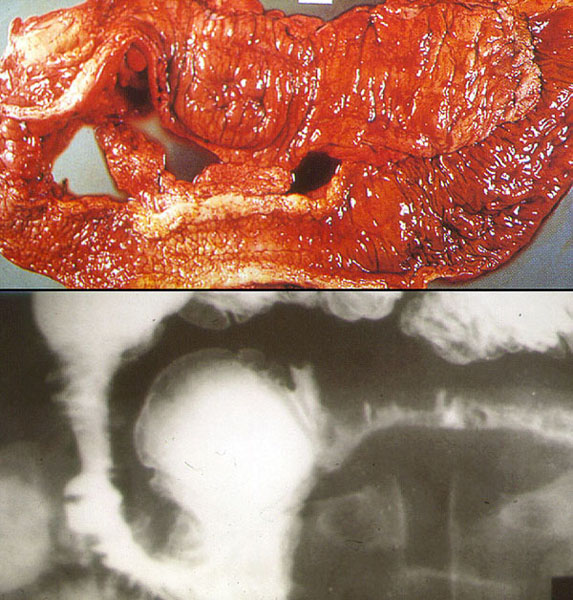
Crohn's bowel image and xray

This upper diagram shows severe inflammation, as well as the abnormal external joining of the intestines as a result of fistulas.

The lower part of the diagram is an x-ray which shows the ileum and caecum, which are inflamed, and narrowed as a result of abscesses and ulceration.

Diagram taken from Pathology.pitt.edu 

In some cases, Crohn's Disease can cause obstruction of the GI tract due to the formation of fistulas, abscesses and extreme inflammation, which may be accompanied by infection. In extreme this will require emergency surgery to remove the obstruction, as these can cause perforation and hemorrhage .

In certain types of Crohns disease, due to the rate of growth and regeneration in the areas of greatest inflammation, the risk of cancer increases.